Service Area — The Carolinas

Dry ice blasting engineered for North and South Carolina conditions.

Dry ice blasting for fire restoration, crawlspace mold, and industrial cleaning across NC and SC — built for Carolina humidity, salt air, and storm season.

Carolina Service Summary

States served
North Carolina, South Carolina
Primary corridors
I-85, I-40, I-26, I-95
Emergency response
24/7, storm-season surge capacity
Regional climate factor
70-75% average relative humidity
Added moisture
None — dry ice sublimates to CO2 gas
Secondary waste
None from the blast media
Typical labor reduction
50-70% vs. sanding or wire brushing
Clearance
Designed to pass third-party PRV testing
What sets REDI apart here

Six reasons Carolina projects need a different approach

01

Built for Carolina humidity, not dry-climate playbooks

The Carolinas average 70-75% relative humidity year-round. Wet remediation methods — soda blasting, chemical washes, pressure washing — add moisture to framing that is already at elevated moisture content, which is why so many Carolina attics fail a second inspection within 18 months. Dry ice sublimates into CO2 gas and leaves zero added moisture, so wood dries down instead of feeding regrowth.
02

Crawlspace-first construction across the Piedmont and Coastal Plain

Unlike much of the country, a large share of Carolina housing stock sits on vented crawlspaces over clay or sandy soils. That geometry traps humid air against floor joists and subfloor sheathing. Our low-clearance blast setup works in tight crawlspaces without demolition, treating joists, sill plates, band boards, and subfloor in one pass.

03

Hurricane and tropical-storm water intrusion response

From Wilmington and the Outer Banks to Charleston, Beaufort, and the Grand Strand, post-storm mold growth begins within 24-48 hours. REDI mobilizes for storm-season surge work and treats saturated framing after drying, removing staining and spore load without a second water event.

04

Coastal salt air, corrosion, and marine-adjacent facilities

Salt-laden air along the SC Lowcountry and NC coast accelerates corrosion and surface contamination on equipment and steel. Dry ice blasting is non-conductive and non-abrasive, cleaning motors, panels, conveyors, and structural steel in place without media residue, grit, or dimensional loss.

05

Historic masonry and heart-pine in Charleston, Savannah River corridor, and Old Salem

Carolina historic districts have strict review standards. Dry ice removes soot, lime wash, and biological growth from antebellum brick, lime mortar, heart-pine timbers, and ornamental woodwork without etching the substrate — a common failure mode of sand and soda blasting under preservation review.

06

Carolina manufacturing: textiles, furniture, poultry, automotive, aerospace

The region's plant base — textile and nonwovens in the Upstate, furniture in the Triad, poultry and food processing statewide, automotive and aerospace along the I-85 corridor — requires cleaning that avoids downtime and secondary waste. Dry ice cleans equipment hot and in-place, with no rinse water to capture and no grit to reclaim.

Coverage

Where REDI works in the Carolinas

REDI crews mobilize from the I-85 corridor between Charlotte and Greenville-Spartanburg, with routine coverage of the Triangle, Triad, Upstate, Midlands, Lowcountry, Grand Strand, and the western North Carolina mountains. Rural and island projects are scheduled as mobilized deployments.

North Carolina

  • Charlotte
  • Raleigh
  • Durham
  • Greensboro
  • Winston-Salem
  • Asheville
  • Wilmington
  • Fayetteville
  • Cary
  • Hickory
  • Greenville
  • Outer Banks

South Carolina

  • Charleston
  • Columbia
  • Greenville
  • Spartanburg
  • Myrtle Beach
  • Rock Hill
  • Hilton Head Island
  • Summerville
  • Florence
  • Beaufort
  • Anderson
  • Aiken
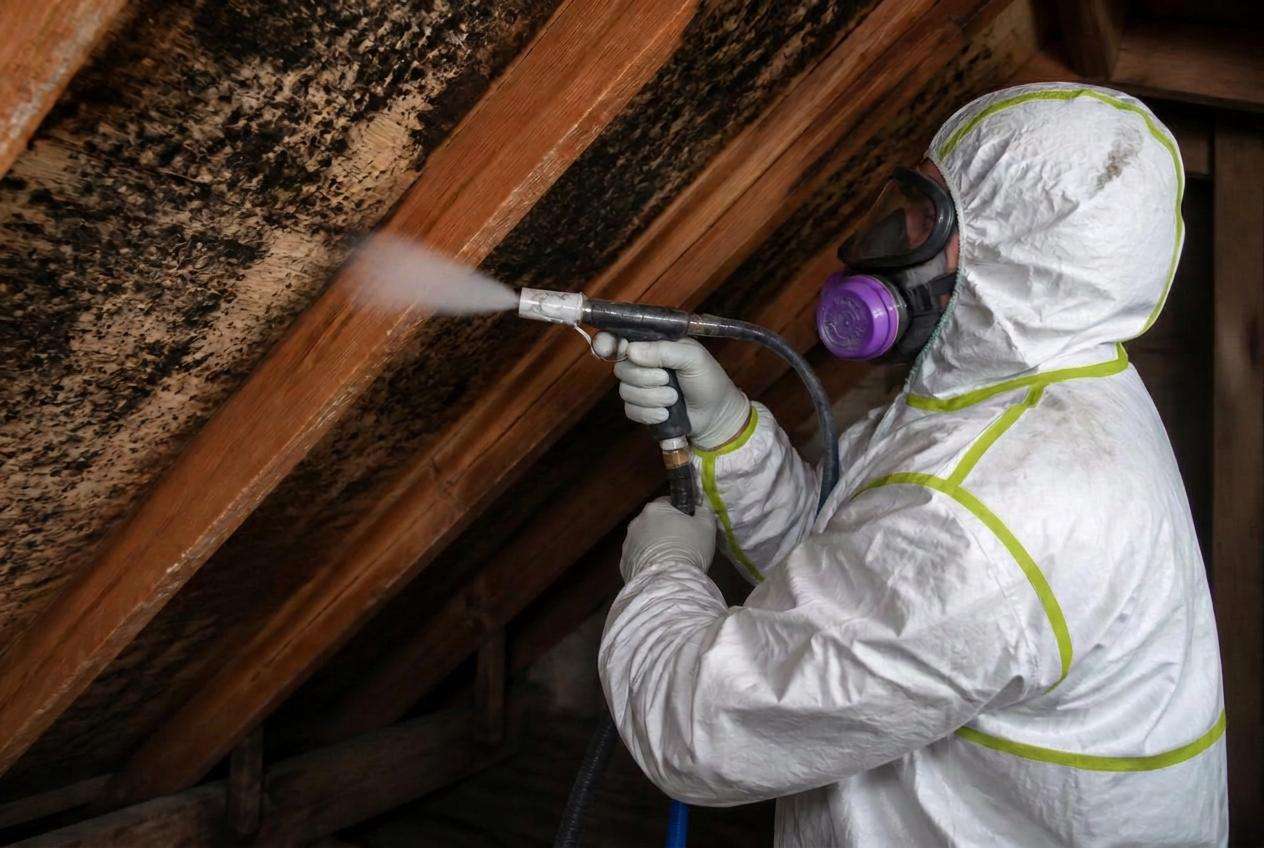
Crawlspace and attic mold remediation with dry ice blasting in a Carolina home
Carolina Questions & Answers

Direct answers for Carolina property owners and plant managers

Does REDI provide dry ice blasting in North Carolina and South Carolina?

Yes. REDI serves both North Carolina and South Carolina, including Charlotte, Raleigh, Durham, Greensboro, Winston-Salem, Asheville, Wilmington, Charleston, Columbia, Greenville, Spartanburg, Myrtle Beach, and Hilton Head Island, with regional crews for the I-85, I-40, and I-26 corridors.

Why is dry ice blasting better than soda blasting for Carolina attic and crawlspace mold?

Soda blasting leaves an alkaline residue that must be rinsed or vacuumed, and wet methods add moisture in a climate that already averages 70-75% relative humidity. Dry ice sublimates to gas, adds no moisture, leaves no residue in insulation or ductwork, and does not require rinse-water containment in a crawlspace.

How fast can REDI respond after a hurricane or tropical storm in the Carolinas?

REDI operates a 24/7 emergency line and stages storm-season capacity for coastal North Carolina and the South Carolina Lowcountry. Mold growth typically begins 24-48 hours after water intrusion, so we prioritize structural drying verification followed by immediate dry ice remediation of framing.

Is dry ice blasting approved for historic properties in Charleston and other Carolina historic districts?

Dry ice blasting is a non-abrasive process that does not remove substrate material, which is why it is widely accepted for historic brick, lime mortar, heart pine, and ornamental woodwork where sand or soda blasting would be rejected. REDI documents pressure settings and test panels for architectural review boards.

Can REDI clean Carolina manufacturing equipment without shutting the line down?

In most cases yes. Dry ice blasting is non-conductive and non-toxic and can be performed on hot, in-place equipment, which is why it is used in Upstate South Carolina textile plants, Triad furniture operations, poultry and food processing, and I-85 corridor automotive and aerospace suppliers.

What does dry ice blasting cost in the Carolinas?

Pricing depends on square footage, access, and contamination severity. Typical Carolina attic or crawlspace mold projects run as a day-rate or per-square-foot scope, and dry ice usually reduces total labor cost by 50-70% versus hand sanding or wire brushing because it is a single-pass process.

Do you handle post-remediation verification for Carolina insurance and real estate transactions?

Yes. REDI's process is designed to pass third-party Post Remediation Verification (PRV) clearance testing, which is commonly required for Carolina real estate closings, insurance claims, and lender-driven inspections.

State-by-State Detail

North Carolina vs. South Carolina: climate and industrial scenarios

The two states share a border but not a restoration profile. North Carolina spans coast, Piedmont, and mountains with crawlspace-heavy housing and a furniture, textile, biotech, and food-processing plant base. South Carolina runs hotter and more humid year-round, with salt-air corrosion in the Lowcountry and an automotive, aerospace, and tire manufacturing corridor along I-85.

NC — Coast, Piedmont, and Mountains

North Carolina

Three climate zones, crawlspace-heavy housing stock, and a manufacturing base built on furniture, textiles, biotech, and food processing.

How does North Carolina's climate change the right mold remediation method?

North Carolina spans three climate zones in one state: humid subtropical coast, humid Piedmont, and the cooler, wetter mountains around Asheville where annual rainfall can exceed 50 inches. That range means a single wet remediation playbook fails somewhere. Dry ice blasting is climate-neutral — it adds no water in Wilmington's coastal humidity and does not require heated drying time in mountain winters, so crews can work year-round without extending the dry-down window.

Why do North Carolina attics and crawlspaces keep failing mold inspections?

Piedmont and Coastal Plain homes are dominated by vented crawlspaces and under-insulated attics. Summer dew points regularly sit in the low 70s, so humid outside air condenses on cool subfloor sheathing and roof decking. Sanding or wet washing removes surface staining but leaves moisture and embedded spores in the wood grain, and regrowth typically shows within 12-18 months. Dry ice reaches the grain and joist crevices in one dry pass, which is what makes clearance results hold.

What North Carolina industrial restoration scenarios does REDI handle most?

The most common NC scopes are furniture and wood-products plants in the Triad (adhesive, stain, and sanding-dust buildup on presses and conveyors), pharmaceutical and biotech facilities in the Triangle (validated, residue-free equipment cleaning), textile and fiber operations in Gaston and Catawba counties (lint and sizing removal from tenter frames and dryers), and food processing statewide. All are cleaned in place, hot, with no rinse water and no grit reclamation.

How does REDI handle hurricane damage on the North Carolina coast?

For Wilmington, New Bern, Morehead City, and the Outer Banks, the sequence is drying first, dry ice second. After a named storm we verify framing moisture content has come down, then blast studs, joists, sheathing, and band boards to remove staining and spore load. Because the process is dry, it does not reintroduce water into a structure that just took on several feet of surge or floodwater.

Can dry ice blasting be used on North Carolina historic and tobacco-era buildings?

Yes. Durham and Winston-Salem tobacco warehouses, Old Salem structures, and mill conversions across the Piedmont use soft brick, lime mortar, and heavy timber that sand or soda blasting would erode. Dry ice removes soot, whitewash, creosote residue, and biological growth without abrading the substrate, and REDI provides test panels and documented settings for local historic review boards.

SC — Lowcountry, Midlands, and Upstate

South Carolina

Year-round humidity with no seasonal dry window, salt-air corrosion on the coast, and an I-85 automotive, aerospace, and tire manufacturing corridor.

How does South Carolina's climate affect restoration decisions?

South Carolina is hotter and more consistently humid than most of North Carolina, with Lowcountry dew points staying in the 70s for much of the summer and mild winters that never fully halt mold activity. There is effectively no seasonal dry window, so any method that adds water — pressure washing, chemical wash, soda blasting followed by rinse — has a longer regrowth risk here. Dry ice is the practical choice in Charleston, Beaufort, and the Grand Strand for that reason.

What makes Lowcountry and coastal South Carolina projects different?

Salt air plus year-round humidity means two failure modes at once: biological growth on wood and chloride-driven corrosion on metal. Elevated pier-and-beam homes on Hilton Head, Kiawah, Isle of Palms, and Pawleys Island expose framing directly to marine air. Dry ice cleans both — spore load off heart pine and framing, and salt and corrosion products off steel, motors, and electrical enclosures without water or conductive residue.

Which South Carolina industrial restoration scenarios does REDI see most?

Upstate manufacturing along I-85 drives most SC industrial work: automotive assembly and tier-one suppliers near Greenville-Spartanburg (weld smoke, adhesive, mold-release buildup), aerospace in Charleston County (paint booth and tooling cleaning to tight cleanliness standards), tire and rubber plants (release-agent and carbon buildup on molds), and textile and nonwovens operations in the Upstate. Dry ice cleans molds and tooling hot and in place, which removes cool-down time from the changeover window.

How does REDI support South Carolina port and marine-adjacent facilities?

Charleston-area warehousing, cold storage, and port logistics equipment sit in a corrosive, high-humidity environment where washdowns add to the problem. Dry ice blasting is non-conductive and produces no standing water, so refrigeration coils, conveyors, racking, and structural steel can be cleaned without a shutdown for drying or a wastewater capture plan.

Is dry ice blasting accepted by Charleston's Board of Architectural Review?

Dry ice is routinely favored for historic Charleston work precisely because it is non-abrasive and does not remove substrate. It lifts soot, paint failure residue, biological growth, and lime-wash buildup from antebellum brick, lime mortar, stucco, and heart pine while preserving the original surface. REDI performs documented test panels at defined pressures so the scope can be presented for review before full-scale work begins.

Carolina Field Scenarios

Representative NC and SC restoration scenarios

Short, scenario-level summaries of how mold, fire smoke, and post-storm sequencing actually run in each state. Details are representative of typical REDI scopes rather than any single named client.

NCWake County, NC — Piedmont

Crawlspace & Subfloor Mold

Situation
1990s vented crawlspace failing a pre-sale inspection. Summer dew points in the low 70s had condensed on subfloor sheathing, leaving heavy staining across joists and band boards after a prior wet wash regrew within a year.
REDI approach
Contain and negative-air the crawl, blast joists, sheathing, and band boards in one dry pass, HEPA vacuum the fallout, then apply a vapor barrier and dehumidification plan.
Outcome
Passed third-party PRV clearance before closing. No added moisture, no grit to reclaim from the crawl.
NCGuilford County, NC — Triad manufacturing

Fire & Smoke Remediation

Situation
Electrical fire in a wood-products plant left acidic smoke residue on open-frame ceiling steel, conveyors, and press equipment. Chemical washing risked corrosion and days of production downtime.
REDI approach
Dry ice blasting on structural steel, deck, and equipment while lines stayed in place; soot and char lifted without wetting motors, panels, or controls.
Outcome
Odor and residue removed with no rinse water, no disassembly, and a materially shorter return-to-production window.
NCNew Hanover County, NC — Coastal

Hurricane Storm Sequencing

Situation
Post-named-storm surge intrusion in a coastal residence. Framing was saturated and early wet cleaning would have reintroduced water into a structure already at high moisture content.
REDI approach
Dry first, blast second: monitor framing moisture to target, then dry ice studs, joists, and sheathing to remove staining and spore load before insulation and drywall reinstall.
Outcome
Clean, documented framing at rebuild, with a dry process that did not restart the drying clock.
SCCharleston County, SC — Elevated coastal home

Lowcountry Mold & Salt Air

Situation
Pier-and-beam home with framing exposed directly to marine air. Year-round humidity produced growth on heart pine while chlorides corroded metal connectors and electrical enclosures.
REDI approach
Single dry ice scope addressing both failure modes — spore load off framing, salt and corrosion products off steel and enclosures — with no water and no conductive residue.
Outcome
Substrate preserved, enclosures cleaned live-adjacent, and no seasonal dry window required.
SCSpartanburg County, SC — I-85 corridor

Fire Smoke in Upstate Manufacturing

Situation
Smoke event in a tier-one automotive supplier coated tooling, weld cells, and overhead steel already carrying weld smoke and mold-release buildup.
REDI approach
Hot, in-place dry ice cleaning of molds and tooling combined with structural soot removal, eliminating cool-down and teardown from the changeover window.
Outcome
Tooling returned to spec without abrasion; combined fire-response and production cleaning in one mobilization.
SCBerkeley & Charleston Counties, SC — Logistics

Storm Sequencing at Port-Adjacent Facilities

Situation
Post-storm water intrusion in warehousing and cold storage where washdown-based cleaning would have added moisture and required wastewater capture.
REDI approach
Structural drying first, then non-conductive dry ice blasting of racking, conveyors, refrigeration coils, and structural steel without a shutdown for drying.
Outcome
Facility returned to service without standing water, wastewater handling, or extended downtime.

Carolina project? Get a site-specific assessment.

Tell us the county, structure type, and timeline. We respond within two hours on business days and immediately for storm and fire emergencies.

Request a Carolina Assessment
Call 24/7Request Quote